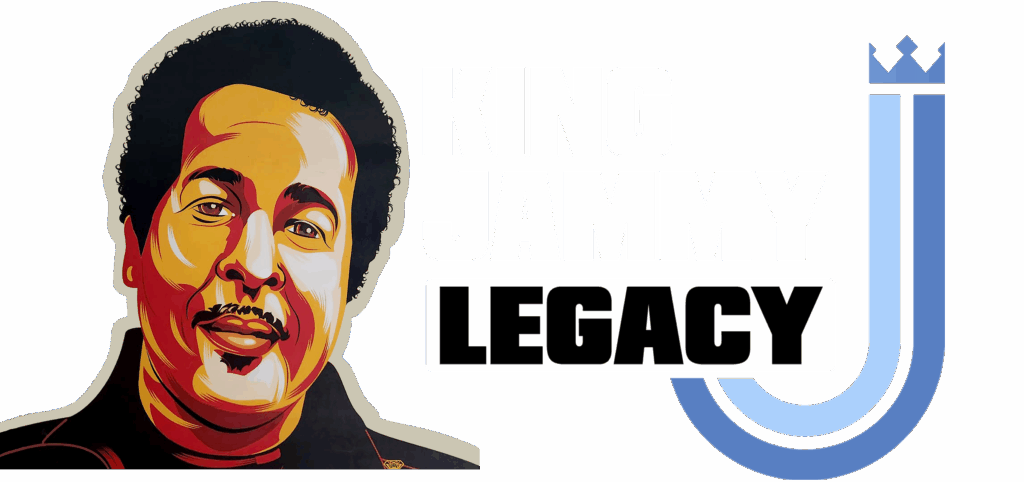
KING JAMMY LEGACY
Early Life and Beginnings
Born Lloyd James in 1947 in Montego Bay, Jamaica, the man who would become known worldwide as King Jammy (formerly Prince Jammy) grew up in Waterhouse, a Kingston district renowned for its vibrant cultural energy and musical innovation. From a young age, Lloyd displayed a deep curiosity for electronics. He taught himself how to build and repair radios, amplifiers, and other audio equipment, skills that would later become critical to his groundbreaking work in the studio.
Beyond the wires and circuits, Lloyd James had a deep passion for music. The merging of these two worlds, technical mastery and musical creativity set the stage for his rise to prominence as one of the most important figures in Jamaican music history.
From Prince to King: The Sound System Era
In the early 1970s, Lloyd James began his ascent through Jamaica’s fiercely competitive sound system culture, initially under the moniker Prince Jammy. He earned a reputation for precision engineering and powerful sound design, which helped set his system apart in a scene where sonic dominance was everything.
Jammy’s career took a transformative turn when he joined forces with the legendary King Tubby, the godfather of dub. As Tubby’s protégé and right-hand engineer, Jammy honed his skills in studio mixing and dub innovation. Tubby’s studio became the lab where Jammy learned to experiment with echo, reverb, and delay techniques that would come to define the sound of dub reggae.
His first major production credit came with Black Uhuru’s debut album “Love Crisis” (1977), recorded at Jammy’s own studio in Waterhouse. Featuring tracks like “I Love King Selassie,” the album became a cornerstone of the roots reggae era, signaling Jammy’s emergence as a full-fledged producer.
During this prolific period, Jammy worked with a roll call of reggae luminaries, including Yabby You, Augustus Pablo, Horace Andy, Johnny Clarke, and Junior Delgado. His work helped shape the sound of the late ’70s, blending conscious roots with experimental dub, and cemented his status as a leading force in Jamaican music production.
Digital Revolution: “Sleng Teng” and a New Era
In 1985, King Jammy made music history with the release of “Under Mi Sleng Teng” by Wayne Smith. Created using a preset rhythm from a Casio MT-40 keyboard, the track became the first fully digital reggae riddim, ushering in the digital dancehall era. The “Sleng Teng” riddim sparked a musical revolution, leading to hundreds of reinterpretations and influencing every corner of Jamaican music from that point forward.
With Sleng Teng, Jammy not only introduced a new sound but also redefined the very fabric of reggae and dancehall. He proved that digital technology could coexist with, and even elevate, traditional reggae sensibilities.
Throughout the 1980s and 1990s, King Jammy remained at the forefront of the genre, producing hit after hit and launching the careers of now-iconic artists such as Admiral Bailey, Ninjaman, Chaka Demus, Shabba Ranks, Bounty Killer.
His sound system, Jammy’s Super Power, became a dominant force on the clash scene and a cultural symbol in Jamaica and abroad.
Legacy and Global Influence
Few figures have shaped Jamaican music as deeply or as lastingly as King Jammy. His work bridges the roots-and-dub era of the 1970s, the digital revolution of the 1980s, and the evolution of modern dancehall and bass-driven music today.
His influence extends far beyond the borders of Jamaica, echoing in the rise of genres like hip-hop, reggaeton, jungle, dubstep, EDM, and more. Producers and artists around the world from underground DJs to chart-topping acts continue to draw inspiration from Jammy’s sonic innovations.
Still active in the studio today, King Jammy continues to reissue classic works, collaborate with new generations of artists, and perform internationally. His name remains synonymous with innovation, quality, and cultural authenticity.
A Musical Dynasty
The Jammy legacy lives on through his sons, all of whom have forged respected careers in music:
John John – A well-known producer with a strong catalog in dancehall and reggae.
Baby G – Recognized for his crisp productions and connection to modern dancehall.
Christopher – Likewise with connection to modern dancehall
Jam 2 – continuing the Jammy name with a futuristic
Together, the Jammy family represents a multi-generational powerhouse in the world of Jamaican music.
A True King of Jamaican Music
From the backyards of Waterhouse to global stages, King Jammy’s story is the story of reggae itself, resilient, inventive, and constantly evolving. With a catalog that spans roots, dub, digital dancehall, and beyond, he has more than earned his crown.
King Jammy is not just a producer, he is a cultural architect, a sonic innovator, and a living legend of Jamaican music.